18 Nov 2026
EC presents proposal for Council Recommendation on Advanced Materials
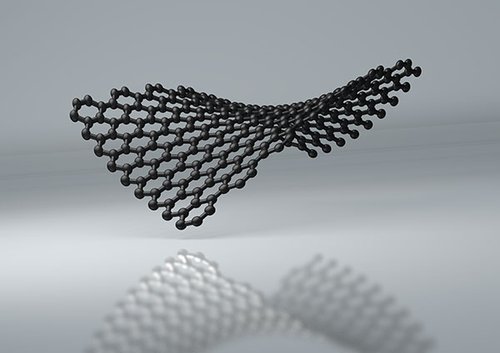
On 18 November 2026, the European Commission proposed an Advanced Materials for Europe agenda to make the EU the world's leader to invent, produce and use safer and more sustainable advanced materials by 2035. The recommendations set targets for 2035 and a cooperation mechanism between Member States, with defined priorities, to turn the EU's scientific excellence into industrial strength by speeding up the journey from lab to market. It will help advanced materials reach large-scale production and wider use in strategic sectors such as energy, mobility, electronics, construction, health, aerospace and defence.
Advanced materials are essential for Europe's competitiveness, resilience and economic security. Engineered at atomic level, they can make products lighter, stronger, smarter and more efficient. They are already shaping everyday life across Europe, helping make buildings more energy efficient, strengthening wind turbines and electric vehicle batteries, enabling lighter and more durable transport and industrial components, supporting 3D-printed medical implants, and powering the next generation of chips for quantum computing and artificial intelligence.
The Commission proposes three benchmark targets for 2035, by when the EU should reach at least:
- 20% more investment in advanced materials research and innovation;
- 20% more EU-based startups and scaleups in advanced materials;
- 20% of projects reaching higher deployment levels in safer and more sustainable advanced materials.
Europe already has a strong foundation, with more than 15,000 companies active in advanced materials and around 1.5 million jobs supported across the EU. It also has world-class research and innovation capacity. To unlock its full potential, Europe needs stronger links across the advanced materials ecosystem, faster access to testing and pilot infrastructure, stronger skills, more resilient supply chains, clearer regulatory pathways, and better data interoperability.
The Commission is, in addition, proposing to set out a framework for closer coordination between Member States, aimed at reinforcing the already strong European sector of advanced materials. More cooperation will allow to better align investments, cut time between research and the commercial application of new products, strengthen Europe's strategic autonomy, and reinforce its technological and industrial leadership. With a focus on skills as well, it will create the conditions to attract more talented scientists, researchers, academics and highly skilled professionals to Europe, in line with the Choose Europe initiative.
With today's initiative, the Commission invites Member States to work together on five priorities by 2030:
- target research and innovation investment in strategic sectors;
- use digitalisation and artificial intelligence to speed up discovery, design, development and testing;
- shorten time to market through better testing, qualification and access to research and technology infrastructures;
- support scale-up and deployment through demand-side measures, strategic projects and public procurement;
- close the skills gap through training, reskilling and upskilling.
The Commission proposal needs to be adopted by the Council of the EU.
For more information: